


If your child is sitting for SPM, chances are you’ve already heard the words “KSSM syllabus” thrown around, and maybe felt a little lost. Don’t worry, you’re definitely not alone. The new curriculum can feel overwhelming, even for parents who were once pretty decent at Maths themselves!
“I don’t need to understand every formula. I just need to know where to focus my child’s energy.”
That’s exactly the right question to ask. After working with hundreds of SPM students, we’ve found that a handful of chapters carry most of the marks. If your child can truly master these 8 topics (not just memorise, but actually understand them) they’re in a very strong position going into the exam.
Let me walk you through each one, what it looks like, and why it matters.
Chapters To Master Before SPM (Part 1)
1. Measures of Dispersion for Grouped Data (Form 5)
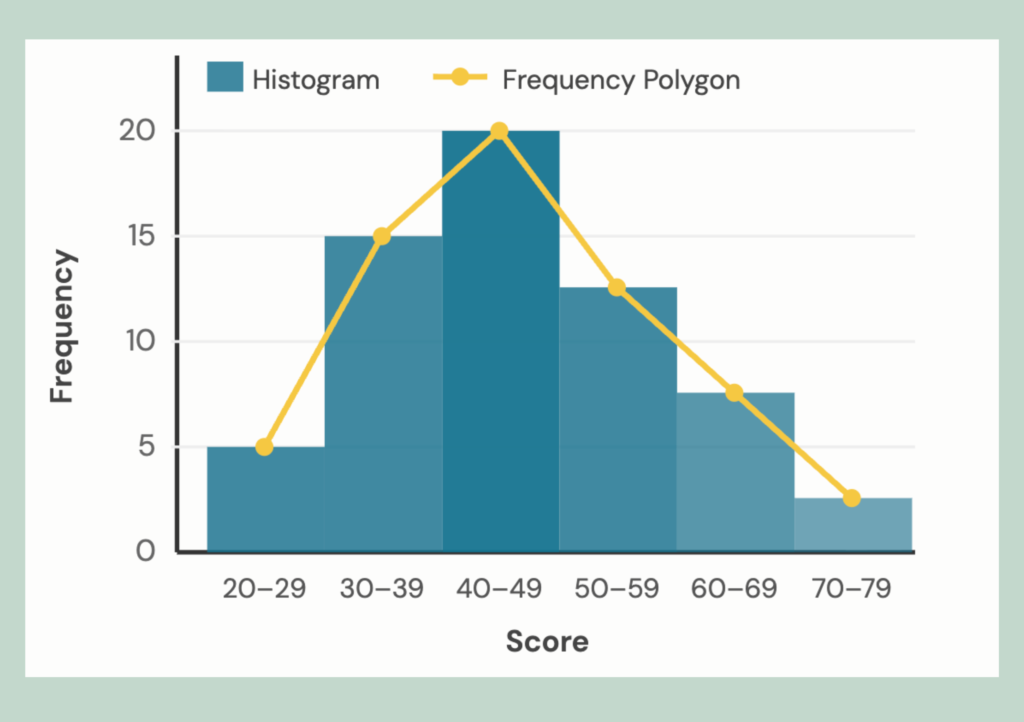
This chapter is about reading and drawing statistical graphs (histograms, frequency polygons, and ogives) and then calculating how “spread out” data is using variance and standard deviation.
Think of it like this: if your child’s class scored between 40–95 on a test, variance tells you whether most students were clustered around 70, or whether scores were all over the place.
Why it matters
Paper 2 Section B. Typically 8–10 marks for procedural accuracy. This is one of the most reliable chapters to score full marks on with practice.
2. Linear Inequalities in Two Variables (Form 4)
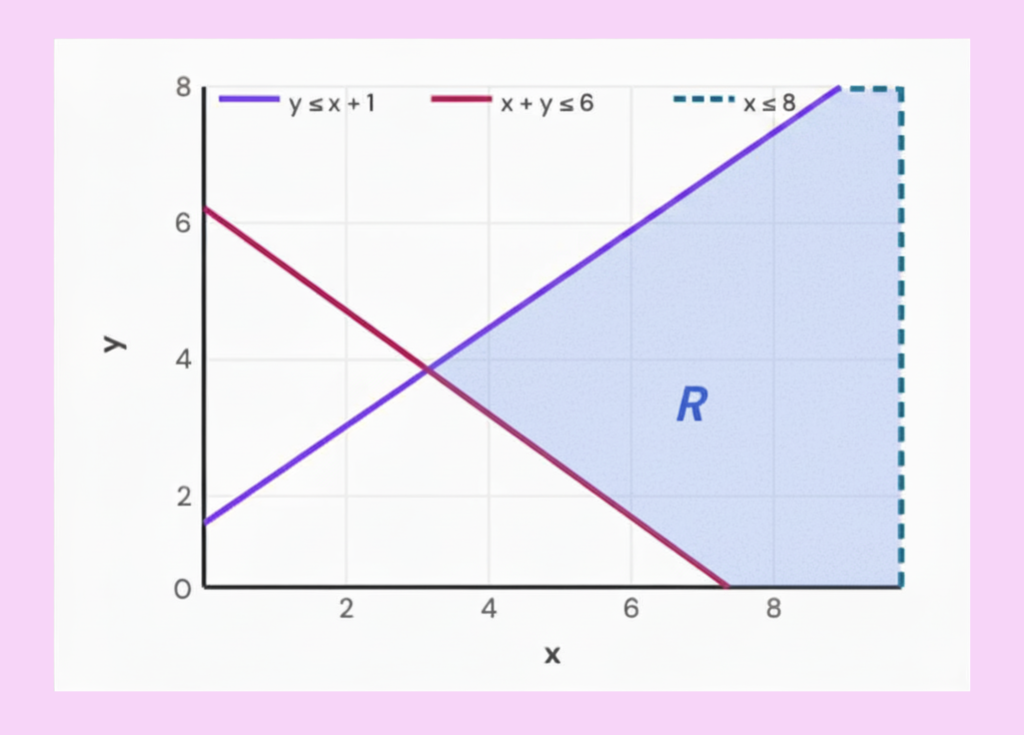
Here, students draw straight lines on a graph and then shade the region that satisfies a set of conditions — like “y must be less than or equal to x + 3” and “x + y must be more than 5.”
It sounds abstract, but real-life examples make it click: “A factory can produce at most 100 items a day given these constraints, shade the region of possible production levels.”
Why it matters
This is the foundation for Linear Programming in Section B/C. Without it, those 10+ mark questions simply fall apart.
3. Matrices (Form 5)
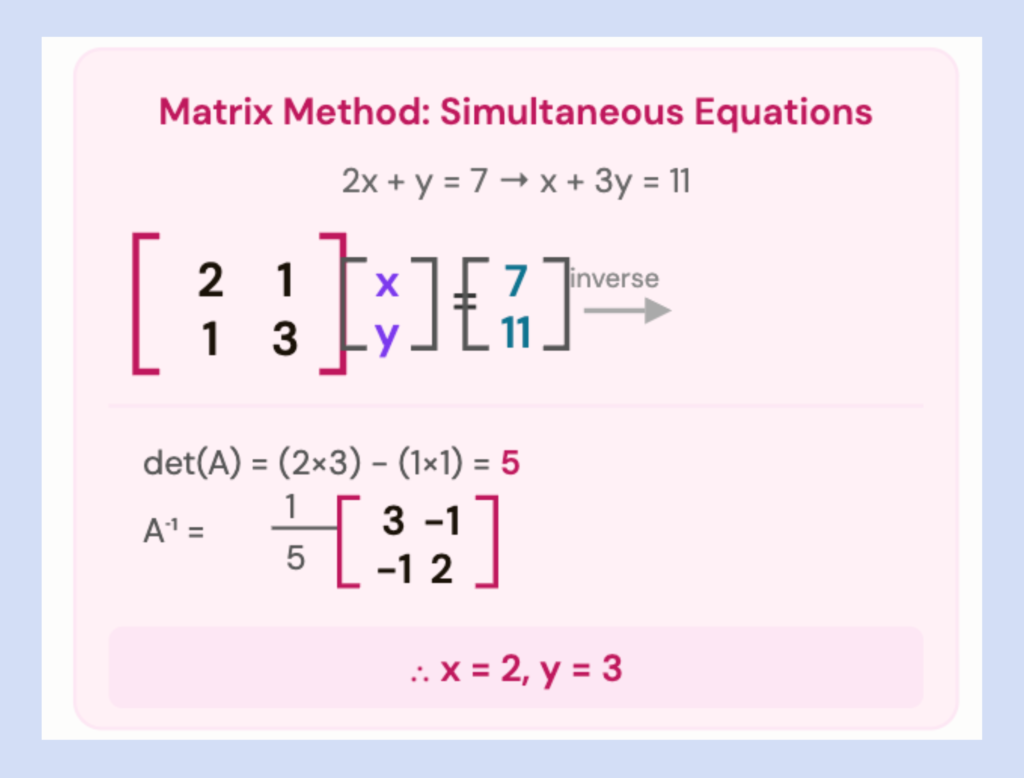
Matrices are essentially organised grids of numbers that follow specific rules for multiplication, addition, and inversion. The big payoff is using them to solve two simultaneous equations in a clean, structured way.
For parents: think of it like solving “I have two unknowns and two clues”, matrices give a foolproof method that, once memorised, always works.
Why it matters
A guaranteed 4–6 marks in Paper 2 Section A. This is one of the most procedural chapters, drilling it correctly means near-perfect marks every time.
4. Congruency, Enlargement & Combined Transformations (Form 5)
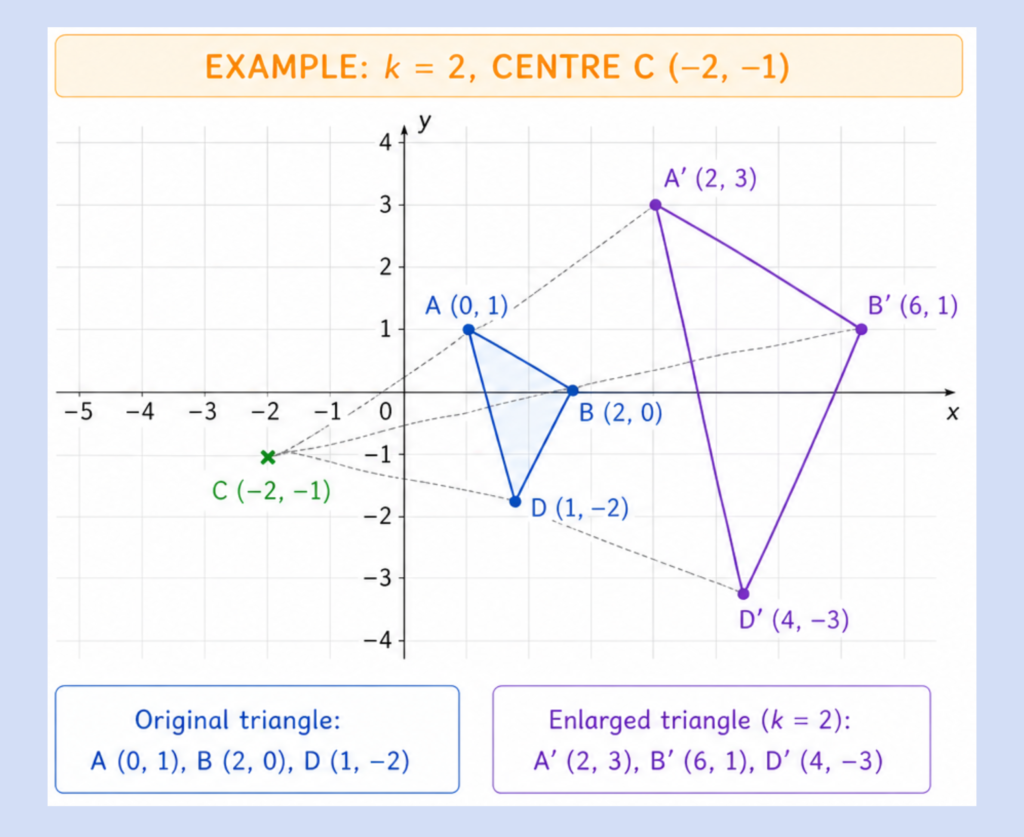
This chapter is all about moving shapes around a grid — rotating them, reflecting them, enlarging them, and combining these movements. Students must accurately describe what transformation happened and find properties like the new area after enlargement.
It rewards students who are careful and methodical — the kind who double-check their working rather than rushing.
Why it matters
A permanent fixture in Paper 2 Section B, worth up to 12 marks. Spatial thinking is key and it’s very practisable.
One Chapter at a Time
SPM Maths isn’t about memorising everything, it’s about knowing where the marks live. These 4 chapters are your child’s highest-impact targets. Help them build confidence here first, and the rest of the paper becomes much less daunting.
What matters most is consistent practice and having the right guidance when they get stuck. With tools like Tupai, your child can break down difficult topics, get step-by-step help, and build their understanding gradually, so they’re not just preparing for exams, but actually understanding math.